AbakusNeuromath
Online — for children aged 5–12

Math + English + LogicImprove math in English

1-to-1 online maths — for children who need support, focus or a new challenge.

  • Math — from counting and patterns to problem solving and olympiad-level tasks

Child’s age

We’ll find the right starting point for your child

68 000+ students worldwide

A student solving a logic task with animals in an online lesson
A boy completing an object classification task
A girl completing an arrow maze in a logic lesson
Spatial thinking tasks on a laptop screen
A girl counting objects in an online lesson
A student counting animals with the Abakus parrot
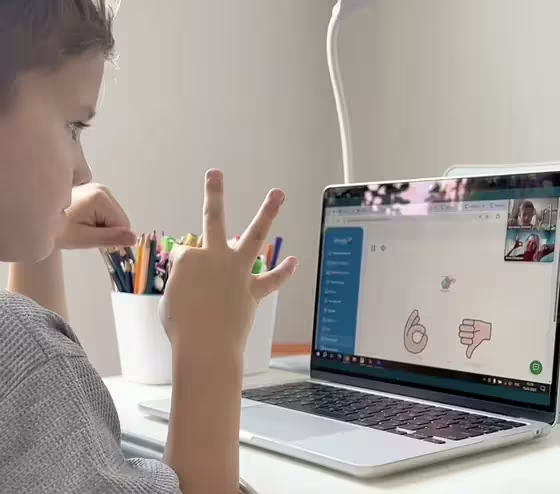
A boy showing the answer on his fingers during a lesson
A lesson with pattern and logic tasks
A girl solving a shape sudoku in an online lesson
Math lesson: units of length

Is this for your child?

Whether they need to catch up or are ready for more, lessons adapt to where they are now.

Maths feels intimidating

A supportive, one-to-one pace helps your child build confidence with numbers.

School maths is getting harder

We work through gaps in understanding instead of rushing to the next answer.

Focus fades during homework

Short changes of activity and neuro-fitness exercises keep thinking active.

Word problems are a struggle

Children learn to reason through a problem, not just memorise a method.

School maths is too easy

Logic puzzles and more challenging tasks offer room to grow.

School starts soon

Counting, patterns and logical thinking give younger learners a starting point.

Find out which programme fits your child

Answer three age-specific maths questions to see a recommended starting point after you send your request.

Modern education teaches children to think, analyse and reason — the principle behind the OECD Learning Compass 2030 and leading UK schools

We don’t know which professions will exist in 15 years. But we can teach children to ask questions and figure out new things — that skill never goes out of date.

Abakus — in-depth neuromath, one-to-one with a teacher

A programme that builds the thinking skills your child will use in school and in life.

One-to-one format

Neuromath — a systematic workout for your child’s thinking

A neuro approach in every lesson: the load is dosed, tasks alternate in difficulty, and the brain works in a state of focus — not fatigue.

Forward and backward counting, number composition, comparing more/less/equal, first word problems with diagrams and tables. We develop spatial and visual thinking — shapes, orientation in space and time, analogy tasks. Logic: patterns, classification, first sudoku puzzles. Every lesson starts with neuro-fitness — a warm-up that switches attention on and tunes the brain for work.

Math adapts to the child’s age and level — the teacher sets the pace individually.

  • Attention and the ability to concentrate for longer
  • Memory and holding several solution steps in mind
  • Logic and spatial thinking
  • Intellectual stamina — not giving up on a hard problem
  • Confidence: “I can do this” from the very first lessons

The programme includes exercises that develop attention and self-regulation.

Counting rings on targets
Balance scales: comparing toys by weight
House puzzle: find the missing piece
Counting rings in the picture
Sheep and fence: number chain problem
Bowling pins: find the hidden number
Counting rings on targets
Balance scales: comparing toys by weight
House puzzle: find the missing piece
Counting rings in the picture
Sheep and fence: number chain problem
Bowling pins: find the hidden number

Meet the Abakus teachers

Real people behind the lessons. Your child learns one-to-one with a teacher who adapts to their pace.

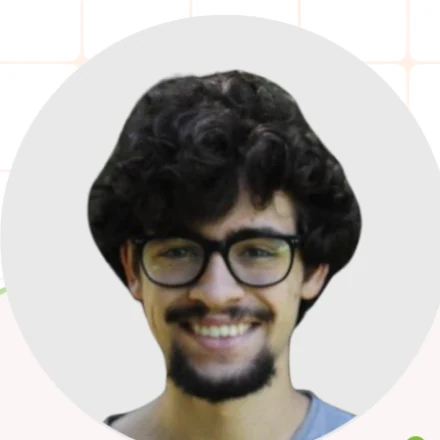
Juan Mestres
Juan Mestres
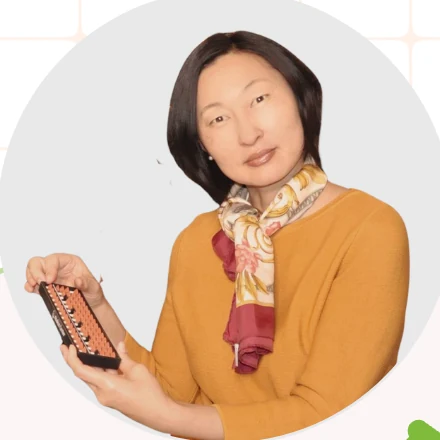
Olga Scherz
Olga Scherz
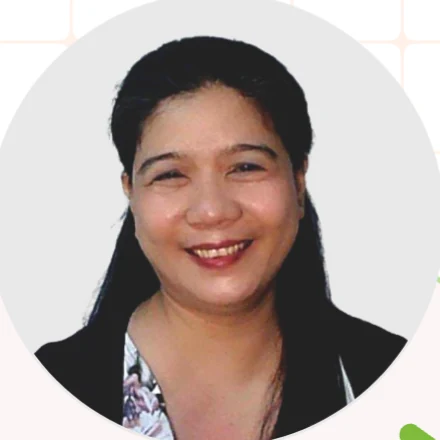
Patrick Mainga
Patrick Mainga
Luzbel G. Reyes
Luzbel G. Reyes
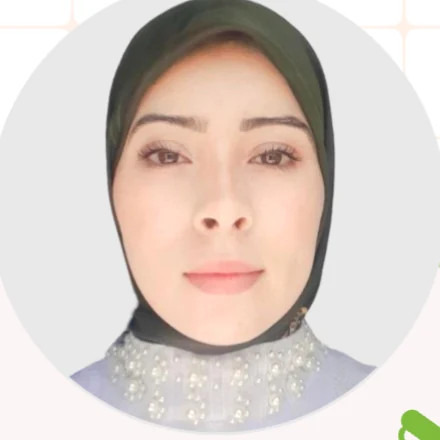
Kebbal Hawa
Kebbal Hawa
Laura Reis
Laura Reis
★
0 years
Developing children’s thinking
★
0+
Students worldwide
★
0 languages
Lessons in English, German, Romanian, Polish, Spanish and Arabic
★
Every 3 months
Progress assessment and certification

Proprietary methodology · teachers are trained in the Abakus approach · offline centres in several countries · lessons are taught in English, German, Romanian, Polish, Spanish and Arabic

Results of our students (based on parent surveys)

“In one year her math test score went from 30 out of 100 to 96 out of 100. Her fear of math is gone.”
Tatiana, USA
“Georgy solves problems faster than his parents and is clearly ahead of his peers in math. He works faster and more confidently, and he’s far more engaged. Georgy, 7 · one year of lessons.”
Natalia, Poland
“Math no longer scares her: Reanna counts fast, knows her times table and solves problems in several ways. She has become more confident and works through tasks on her own. Reanna · more than 3 years of lessons.”
Taira, Dubai
“In a year Zoya became far more confident with numbers and much faster at math tasks. She enjoys the lessons, and her teacher knows how to engage and support her. Zoya · one year of lessons.”
Olga, USA, New Jersey
“Eva finds counting much easier and now counts confidently up to 100. She loves the platform, the method and the teacher. Even in summer, when we paused other clubs, we kept Abakus — Eva wanted to continue. Eva · six months of lessons.”
Olga, Germany
“The teacher develops not only math but the child’s thinking as a whole — in a playful format. The boys are strong in class and praised at school; they reached the third of four stages of the local olympiad without any special preparation. Martin, 8, and Filipp, 9 · 2–3 years of lessons.”
Tatiana, Poland
“Within a month we felt clear progress in math at school. The teacher supported her at the right moment, and the neuro-gymnastics and tasks help her switch on and think more. Kaylin, 6 · one month of lessons.”
Katya, France
“Abakus helps Ekaterina learn convenient ways to solve problems and builds flexible thinking. She enjoys the lessons and loves logic tasks and number puzzles.”
Olga, USA (Brooklyn)
“What matters to me is the critical thinking and analysis they build. The neuromath lessons are exactly the mental workout my daughter needed.”
Irina, Germany
“A great combination: math and logic, plenty of food for thought, in a playful, easy-going format. Exactly what my children needed.”
Alexandra, Switzerland
Trial lesson

Book a trial lesson — and see how your child thinks

A child studying online with an Abakus teacher
Gift when you sign up

You can receive a gift PDF book from the Abakus school and up to 3 months of free lessons

Ask us about eligibility and the full offer terms before enrolling.

Answer a few questions — we’ll match a day, a time and a teacher.

Frequently asked questions

The programme is designed for at least 6 months of regular lessons — that’s the period in which stable skills of counting, concentration and classroom confidence take shape. Parents report stronger results — better grades, olympiad participation — after six months to a year.

The schedule is flexible: a lesson can be moved to a convenient time, and in case of illness, travel or a heavy school workload the subscription can be paused with paid lessons frozen. Nothing is lost — lessons are carried over to when your child is ready to return.

All lessons take place online on Abakus’ own learning platform with a live teacher. The format works for families in any country and requires no special technical skills — children pick up the interface quickly and can study independently.

Abakus combines neuromath with the development of thinking as a whole — it’s not just fast counting, but systematic training of logic, concentration, memory and the ability to find non-standard solutions. Unlike classic mental arithmetic focused on the abacus, here a child also works with word problems, learns to explain their reasoning and builds critical thinking — something parents preparing children for selective and gifted schools particularly note.

Lessons are available in English, and teachers adapt explanations to your child’s level. Many families abroad choose us precisely because the format is comfortable for bilingual children.

No, the programme suits every level — from complete beginner to advanced. The teacher assesses the level in the first lesson and sets the right pace.

Lessons are one-to-one with a teacher and usually take place 1–2 times a week. We agree the exact frequency and time with you after the trial lesson, based on your child’s age and workload.

The trial lesson is free. We assess your child’s current level and share feedback and recommendations. Afterwards, we can discuss a teacher and schedule that suit your family. Full programmes start from approximately £45 per week; the lesson length and exact plan are confirmed with you before enrolment.